Supporting elite specialists is a special task of the Scientific Vice-Minister in the 14th government
Hossein Roozbeh stated:
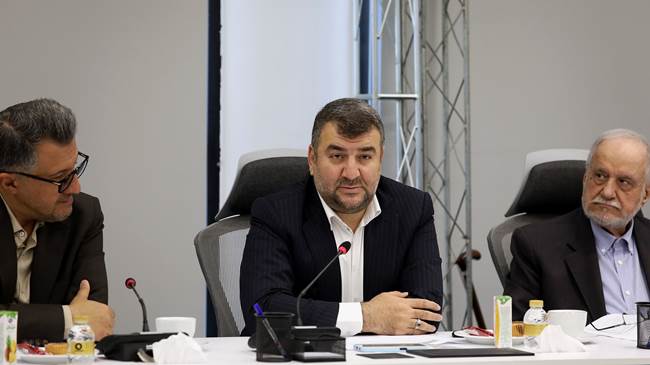
The head of the Organization for the Development of International Scientific and Technological Cooperation, in a brainstorming session with the vice presidents for research of universities and managers of scientific centers, called supporting expert and elite human resources one of the main priorities of the Scientific Vice-Minister in the 14th government.
According to the Communication and Information Center of the Vice-Minister of Science, Technology and Knowledge-Based Economy of the Presidency, a brainstorming session of the vice presidents for research of universities, the elite foundation, science and technology parks, research institutes and top research centers was held on the program of cooperation with Iranian specialists and entrepreneurs abroad.
Hossein Roozbeh, head of the Organization for the Development of International Scientific and Technological Cooperation, while welcoming the attendees, pointed out the beginning of the tenth year of implementing the program of supporting Iranian specialists and entrepreneurs abroad and stated: After a decade of implementing this program, the time has come to summarize the experiences. It is natural that we have had many successful experiences on this path and in some cases we have faced challenges. Now we need to review these experiences and design the future path more carefully.
Referring to the performance of programs related to attracting and interacting with Iranian elites abroad, Roozbeh said that this area has two main parts, some of the elites are present inside the country and are managed by the National Foundation for Elites, and the other part is experts and elites who work abroad.
According to this official, immigration should not be considered a purely negative phenomenon; many people have had the experience of traveling and working abroad, and this experience can serve the scientific development of the country.
He called one of the successful programs of this organization “Cooperation with Iranian Experts and Entrepreneurs Abroad” and said: This program includes a diverse range of support; From supporting a lecture by an Iranian professor living abroad to supporting the permanent presence of experts in Iran. According to Roozbeh, this program does not necessarily require permanent physical presence at the beginning of the interaction path, and the support includes short-term cooperation to long-term presence.
Referring to the country’s economic conditions, Roozbeh also said: The economic conditions are clear to all of us and we cannot claim to be exceptional, however, the supportive and long-term view of Dr. Afshin and officials in the field of science and technology, including the National Foundation for Elites, the Iranian Science Foundation, and the Organization for the Development of International Scientific and Technological Cooperation, has led to programs to support expert human resources being pursued with seriousness. He stated: In the early years of the program, our focus was on identifying and attracting experts, but now, after about ten years, the main issue is “retaining” these forces.
According to him, if someone is recruited through this program and even established as a faculty member, it is not fair for them to continue the same previous path without additional support after this stage.
Ruzbeh added: Accordingly, within the framework of the “Stability” plan that was proposed at the end of last year and despite financial constraints, we tried to design a complementary initiative for the program of cooperation with Iranian experts and entrepreneurs abroad to form a network of professors of this program and develop their scientific activities. This plan is actually a continuation of the program of cooperation with Iranian experts and entrepreneurs abroad and, after the identification and recruitment stage, focuses on maintaining and establishing the long-term presence of experts in the country.
The head of the Organization for the Development of International Scientific and Technological Cooperation emphasized: Human resource support is only part of the activities of this organization, and the organization also has programs in areas such as postdoctoral courses and joint research projects with different countries.
Referring to the limitations of some countries for scientific cooperation with Iranian researchers, he said: Although some countries have created limitations, the capacities for scientific cooperation in other countries still exist. For example, China, which is now at the top of the world’s research production, is one of the suitable platforms for joint scientific cooperation, and there is a possibility of defining joint university projects in this field.
Roozbeh continued by considering the role of the Organization for the Development of International Scientific and Technological Cooperation as more coordination and facilitation of interactions, adding: The main task of the organization is to create a platform for interaction and coordination between universities and scientific institutions. In this direction, the proposals of universities and researchers can play an important role in the formation of new cooperation.
He also referred to the capacities for cooperation in the form of multilateral international organizations and agreements such as BRICS, saying: Iran has significant capacities in these areas, some of which have not yet been used, and the organization is ready to take advantage of these capacities to develop scientific interactions.
The head of the Organization for the Development of International Scientific and Technological Cooperation, emphasizing the availability of the organization’s managers and experts to universities, added: “The organization is trying to have close and continuous contact with universities, but in order to form effective cooperation, it is necessary for this contact to become more active at the university level.”
He went on to propose holding joint meetings with universities to introduce the organization’s programs and support in the field of international scientific and technological interactions.